


TL;DR
Isabel Wen, co-founder of Aurelius, started as a nanotechnology researcher and later worked at TEDCO, where she saw funding decisions from the funder’s side of the table. Aurelius now coaches early-stage founders, and the organizations that support them, to turn complex ideas into pitches that earn a yes from funders, partners, and customers. Isabel shares how pitches have shifted toward proof, why ecosystems need a dedicated convener, and why an online hub can make ecosystem building more accessible, transparent, and equitable.
__________________________
"I have worn a lot of the different hats of a business," she says, "from bench to business leadership."
She moved from research and development into commercialization, marketing, and sales, and later into professional development and entrepreneur development. Prior to starting her own firm, she worked at TEDCO, a venture capital firm and economic development organization, where she saw how funding decisions look from the other side of the table.
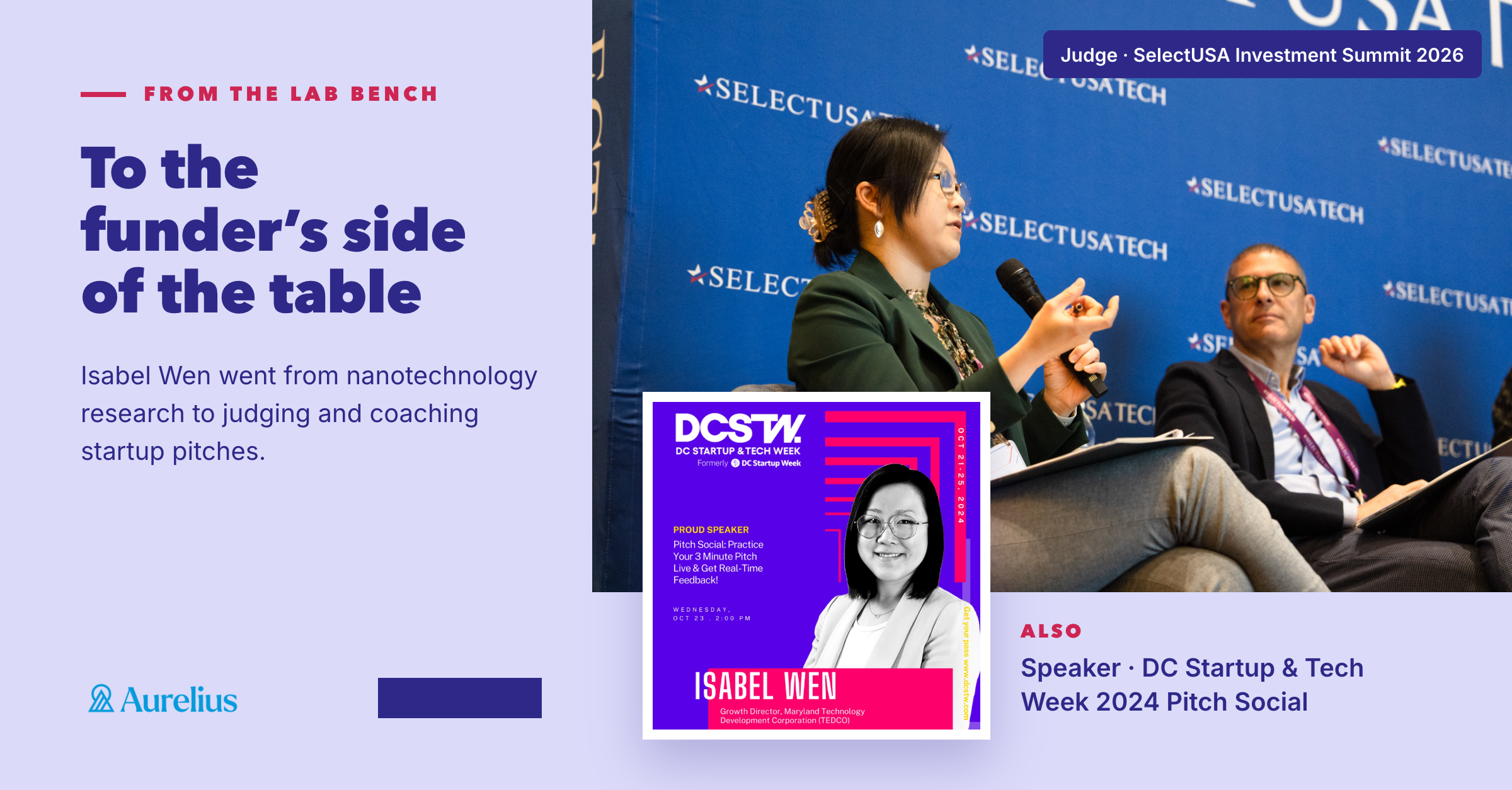
Each move asked for a different mindset and skill set. Isabel says the biggest lesson is that "you just learn from mistakes," and that "you also learn from other people's mistakes." She found that many people will help someone a few steps behind them, often for free. At many of the companies she worked for, about one in three employees were women, and conversations with women ahead of her helped her find career pathways and make the next jump. Sometimes a 15 or 30 minute conversation was enough. She encourages others making similar transitions to stay eager and humble and not to fear mistakes.
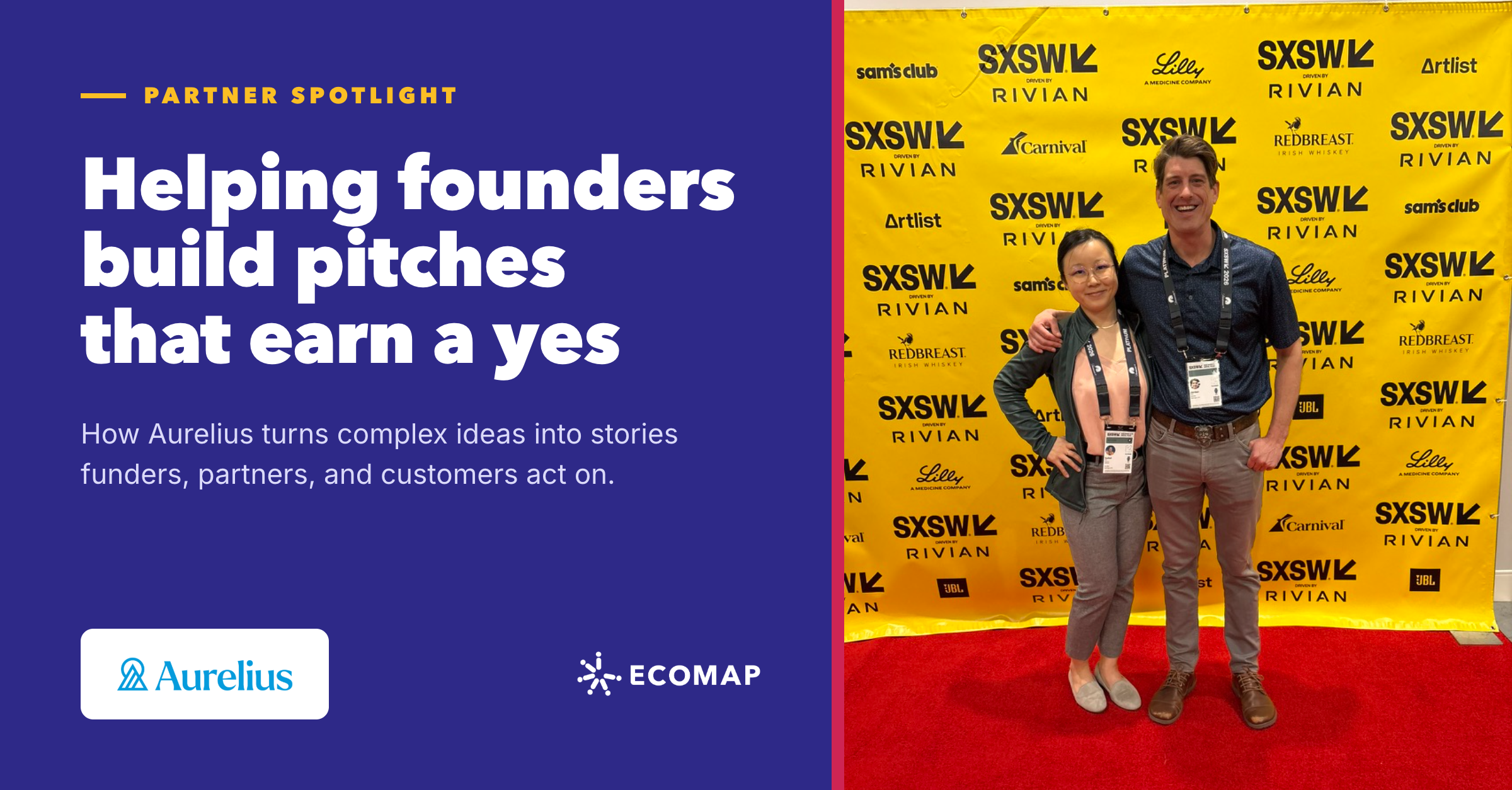
Those experiences led her to co-found Aurelius, a boutique communications strategy firm that helps entrepreneurs distill their pitch and value proposition so a funder, investor, grantmaker, new partner, or customer can see why working with them makes sense. Her connection to EcoMap began two months into her role at TEDCO and has continued as the two organizations serve many similar clients.
A familiar difficulty for founders with new ideas
Early-stage tech founders are often building something that has not been solved before. Isabel notes that they tend to combine industries and business models, which makes it hard to take an idea that seems complex and distill it into something an audience can understand and say yes to. She saw the same pattern repeatedly while working with founders - and mentors, advisors, and investors described it too. The challenge is common across startup communities and was the starting point for Aurelius.
Funders work under their own constraints. Isabel uses the word to cover both investors and grantmakers, and she says the first issue is that founders "don't know what it's like to be in the shoes of a funder."
A funder may review 100, 200 or more applications, so even an interesting idea has to be said quickly and succinctly. It also has to match the funder's stage, industry, and other requirements.
Sometimes a strong company fits and still loses because a fund can write only so many checks and another opportunity is slightly better. "It's not always you," Isabel says. Given that volume, a warm introduction from someone the funder trusts goes a long way.
Coaching built from both sides of the table
Aurelius works with two groups. The first is entrepreneurs who are past the idea stage and trying to reach the next phase, whether that means funding, a partner, or customers. They often struggle to keep the message short, simple, and easy to understand, and Aurelius coaches them one on one. The second is the organizations that serve those founders, including entrepreneur support organizations, economic development agencies, accelerators, incubators, universities, and government agencies building or running programs for early-stage companies.
Much of the current work is pitch coaching for investment, and the skills carry over into sales. One company Aurelius worked with earlier this year said the time it takes to get someone to say yes fell from 30 to 45 minutes to 10 to 15 minutes, which allows more conversations and faster closed deals.
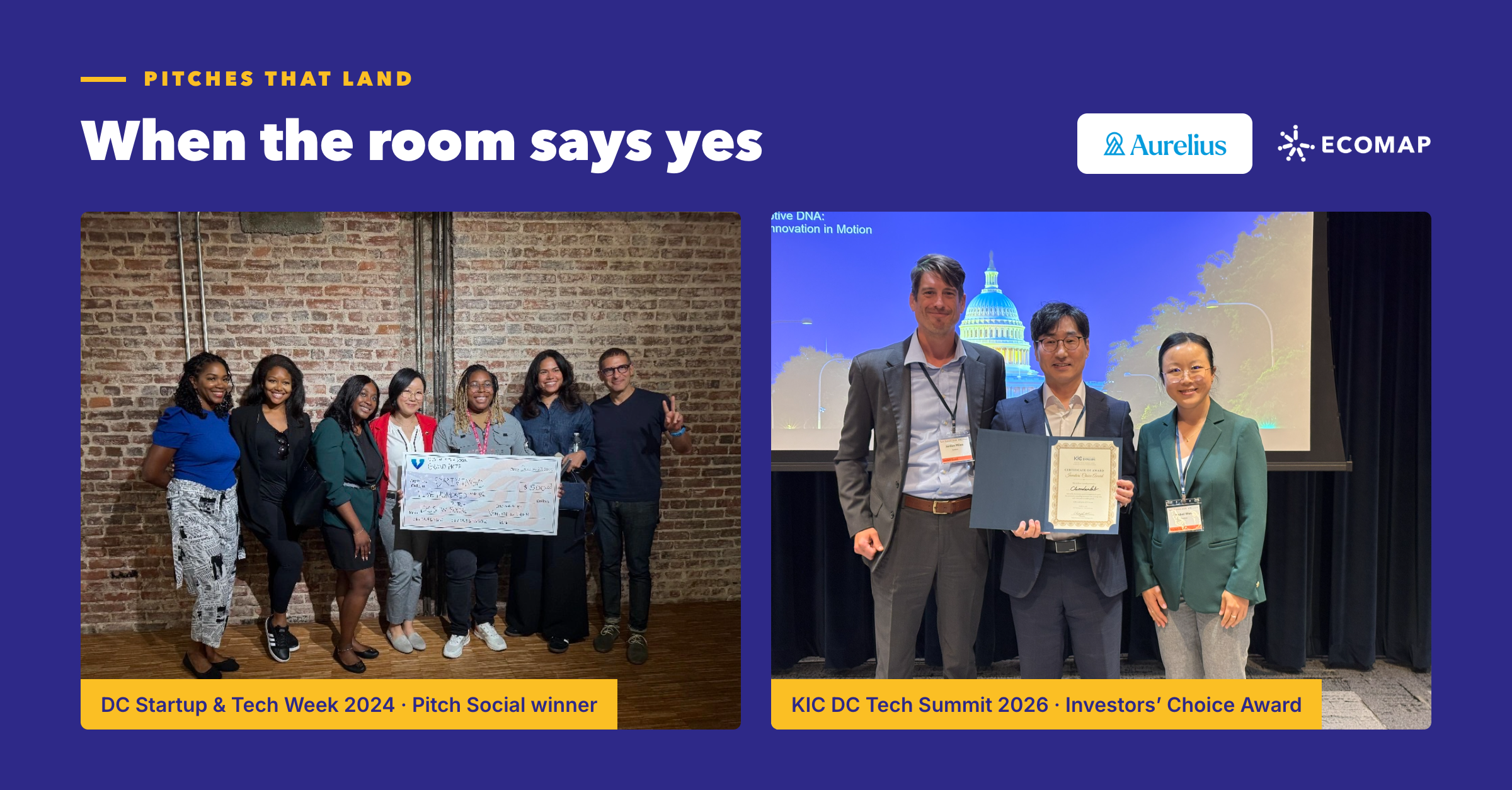
Isabel's program work includes pitch coaching for the Korea Innovation Center Washington DC, coaching in an NSF-funded challenge, and advising SXSW’s annual Pitch competition. She sees a common structure in all three. Each is centralized and institution-based, with substantial backing and staff, and each helps early-stage companies gain traction through advisors, funders, or visibility.
Pitches themselves have changed. Isabel describes 2019 as a peak, which she ties to analysis from groups such as the National Venture Capital Association, when a pitch could lead with a strong idea and a team. With a smaller venture capital pool and AI drawing so much attention, pitches now shift toward proof. The message becomes "here's what we've accomplished for this product in this space, and here's what we validated." Founders can do some work without funding, but certain steps need a little, and the pitch now asks them to show those steps first.
Ecosystems that reach a ceiling
Isabel's deepest exposure to date is to Maryland.
"The depth of ideas and innovations and businesses just in Maryland alone. It's incredible," she says.
She sees a similar situation in Maryland and New Mexico, two ecosystems that work with EcoMap and already have many active startups. Both are working to expand what exists. Startups need funding to get to a certain point, and they are not funded because they have not reached it. Breaking that cycle also involves changing the story told to the wider world. The story to tell, Isabel says, is that "we're not a super early ecosystem." These places have impressive companies that are growing and expanding, innovation that remains untapped, and many resources behind them.
She also has a view on what makes collaboration work.
In her experience there is a centralized body or convener "responsible for making sure everybody is getting back in the room together, getting updated, moving things forward."
That role needs funding or volunteers and a long-term commitment. Where collaboration struggles, the role is missing, or one organization picks it up, drops it, and another does the same. Volunteer-based convening can work, she says, but it is much more difficult. Many organizations consider funding it as outside of their focus, which leaves open the question of who is supposed to.
A research-based view of ecosystem building
Isabel met Pava (Pava LaPere, EcoMap's forever Chief Ecosystem Officer) at a Techstars Demo Day, introduced by a TEDCO colleague. About a month later she visited EcoMap's Baltimore offices. "I had never met anyone like Pava before," she says, describing someone who understood the pain points of ecosystem building so deeply that it was a field of research and science. Isabel had long taken part in ecosystem building informally, as someone who loves to network and connect people, and she had not seen it approached with that much structure.
The idea she took from it was a different way to handle introductions. Traditional ecosystem building is one to one. Each conversation points to another person to meet, which leads to another conversation, a waterfall that takes time and requires access to the right people. Each time, a founder has to reintroduce themselves and their company. Pava's alternative was an online hub where the resources are kept current and searchable by anyone. Isabel values one-on-one conversations, and she saw "an opportunity to make ecosystem building more accessible and transparent and more equitable." That idea sits close to what EcoMap builds as connective infrastructure for ecosystems.
Where to start and who should reach out
For an ecosystem organization that wants to support founders better and is unsure where to begin, Isabel's first suggestion is a conversation. Many people in ecosystem building would be glad to talk, she says, with "no strings attached. We're here to help." Her second is to look at ecosystems similar to your own. They need not match exactly, but size, geography, population, demographics, and education level are useful points of comparison, along with whether the area is metropolitan or rural. History helps too, including any boom and bust, past or present migration, and whether the community is distributed with limited access to experts, common spaces, or events. It also helps to compare the audiences served, such as experts to experts, experts to entrepreneurs, business owners to business owners, and institutions to institutions. From there she suggests looking at each ecosystem's constraints in budget, people, and time, the outcomes it reached, and how it is doing now. “EcoMap case studies and partner spotlights are a great place to start,” Isabel suggests.
Aurelius is not geographically bound, with clients across the country and some internationally, and Isabel is always looking for more partners. The firm is also expanding into on-demand content, including downloadable courses, ebooks, and guides, and interested readers can reach out or subscribe to the newsletter for updates.
Learn more about Aurelius at be-aurelius.com