

TL;DR
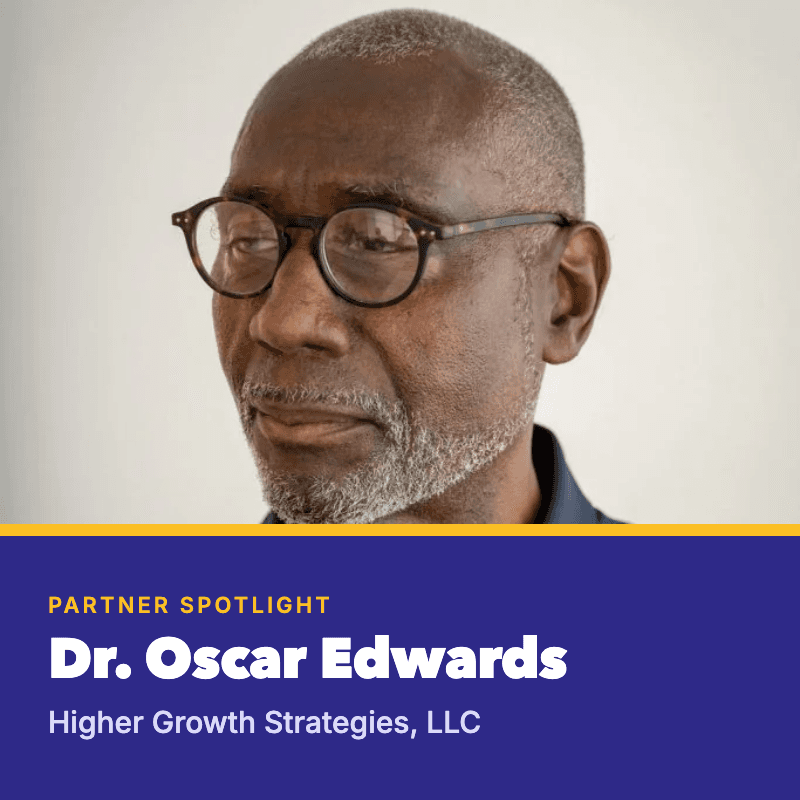
Oscar Edwards is President and CEO of Higher Growth Strategies, LLC, has spent more than 30 years preparing small and diverse businesses to work with large infrastructure companies, with a focus on architecture, engineering, and construction since about 2011. His programs rest on three drivers of leadership, the client, and metrics. In this spotlight, Oscar shares why local firms now sit at the center of major projects, how his study of eco networking led him to EcoMap, and why workforce development is the largest opportunity ahead for small businesses in the AEC industry.
__________________________________________
Oscar's starting point was a niche he saw early. Large institutions depend on a base of contractors, and small businesses often arrive without knowing the practices those institutions expect. Oscar began by running workshops for small businesses with SBDCs and SBA-related organizations. Large corporations then asked him to design programs that would increase the number of potential subcontractors in their pipelines. The first came through a Caltrans contract for training and outreach, and later programs followed with Southern California Edison, SoCalGas, and San Diego Gas & Electric.
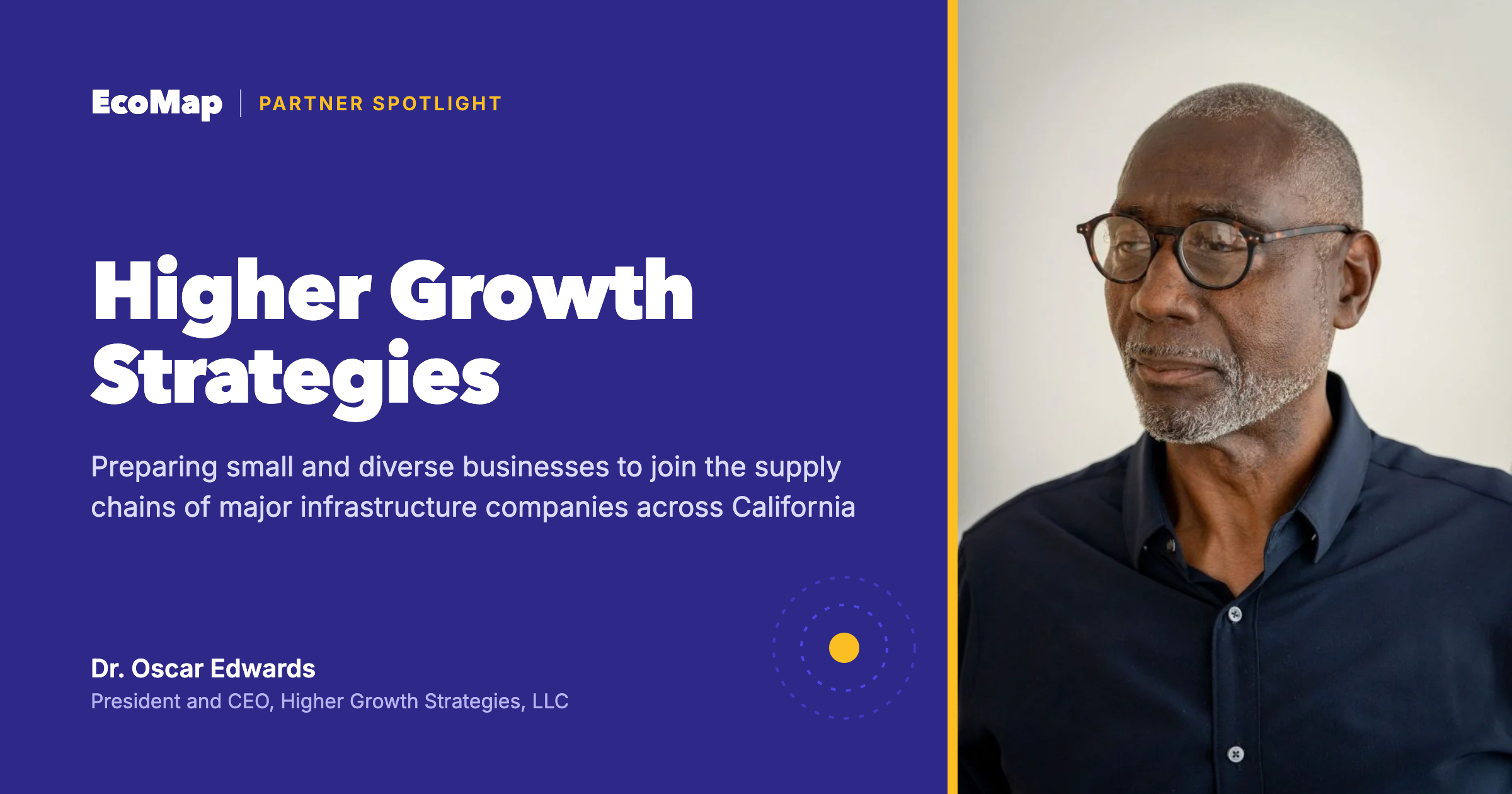
Today he also advises owners of firms with annual revenue from several million to 20 or 30 million dollars, working with the leader rather than the whole team. His connection to EcoMap began roughly four years ago and has grown into a working partnership.
A familiar problem for large buyers and small suppliers
Major corporations, in Oscar's experience mostly infrastructure companies, depend on suppliers.
"No one can do it alone," he says, so each keeps a base of contractors and wants that base to grow. Small business owners, most of whom came from a trade, are skilled at the work and often new to how a large company vets a supplier. An owner who has not been through a proposal review may not know what evaluators look for in a bid or a company profile, and that is the problem Oscar's training programs were built to address.
The difficulty runs in both directions. Owners and buyers each know what they need and have trouble locating it.
"I know what I'm looking for, but I don't know where to find it," Oscar says. A small business owner may be searching for the right connection to a major firm, while a corporation entering a new region is searching for the local firms that can meet its requirements. Each side loses time, and the same pattern appears wherever a large organization needs to work with a local business community, including chambers, economic development organizations, and state agencies that sit between the two.
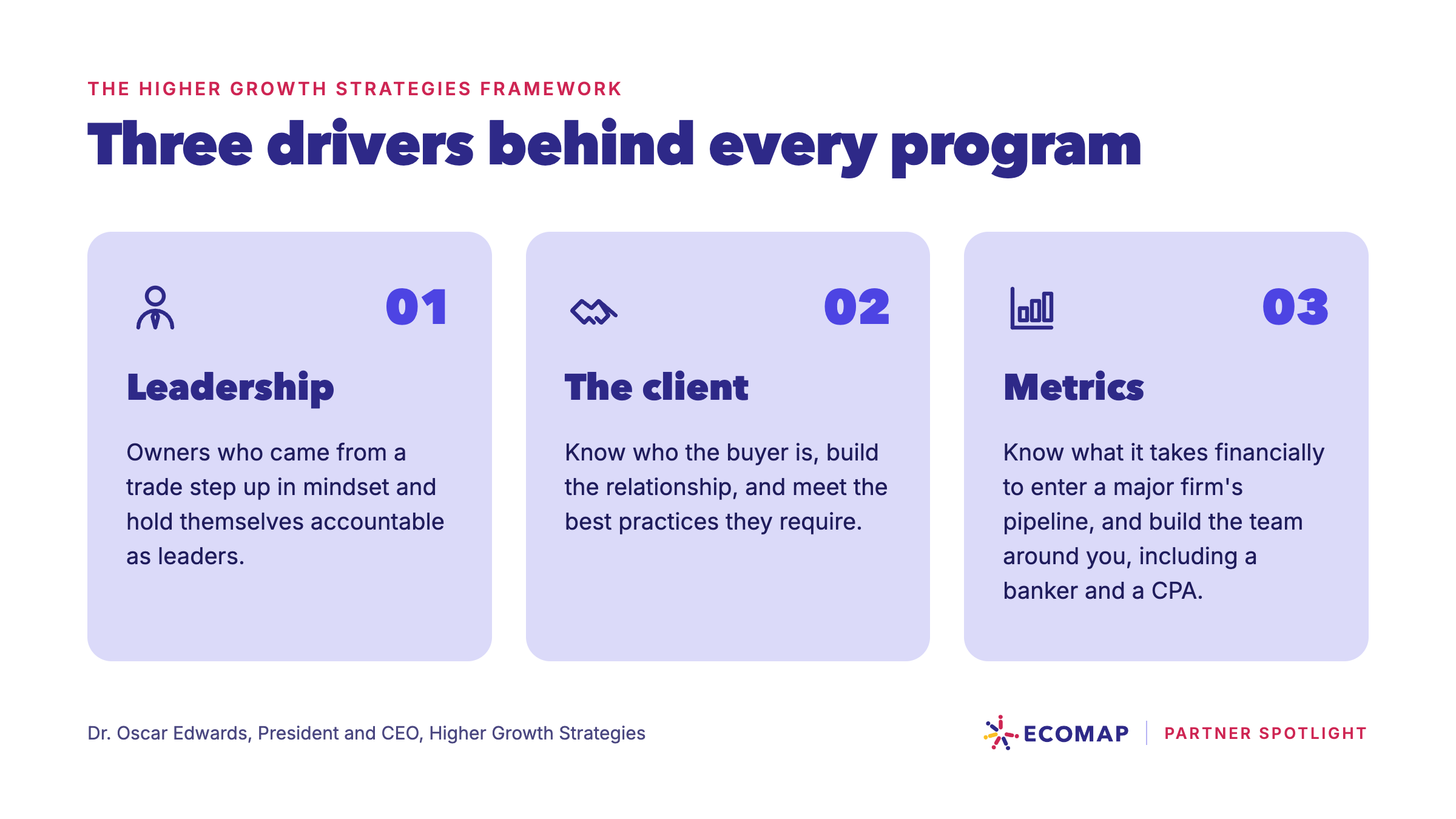
Three drivers behind every program
Oscar condensed his programs into three drivers, and his research since then has validated them:
Corporations have since built supply chain training programs of their own. For roughly 15 years Oscar served as finance faculty lead for the Goldman Sachs 10,000 Small Businesses program at Los Angeles City College, which wrapped up its Los Angeles run in 2025. Because he knew the local ecosystem of providers, he brought them into the classroom for personal introductions, and he says that helped many participants get on their feet right away.
The same three drivers run through the advisory work he does today with individual firms.
Why local businesses now sit at the center of major projects
Oscar names the biggest change in his field as the value large organizations now place on small and diverse firms. Early in his career a local business was not seen as an asset to a major project. Today a corporation that wins a large infrastructure job in a region where it is not based can offer that region additional economic impact, and local businesses embedded in the project send resources into nearby communities directly. Oscar brings this point to both audiences, and he tells large organizations that it is important to know the local ecosystem of firms that can meet their needs.
He describes a second layer to a successful project. Meeting the technical requirements of the stakeholders delivering the work is one part. The other is building communication and understanding with the local market, which means outside firms have to "get down in the trenches at the grassroots level," where the advocates who influence municipal government are found. Many small business owners are community leaders as well, with credibility among pastors and school district members.
A deal made only at the top, Oscar says, can meet a bumpy road when local stakeholders have not been heard, and connecting those groups is part of what he does.
From general networking to a hub where resources can be found
Oscar went back years later and earned a doctorate, and his study focused on what he calls eco networking.
Social networking is a general forum that most people use. Eco networking is about alignment on a relational basis around the assets each party holds, with the aim of reaching the specific resources a person has already identified, and it moves past the transactional toward a more transformative relationship.
That idea is what drew him to EcoMap. "If I'm a small business owner, you save me a lot of time. If I'm a major corporation, if you can create the environment for that to happen, you've saved me a lot of time," he says.
Oscar met EcoMap roughly four years ago at a national small business and entrepreneurship association event, where he chaired the Minority Women Owned Special Interest Group. EcoMap had a booth and joined several breakout sessions. He began following the company's work, and his reaction was "this makes sense." EcoMap builds connective infrastructure for ecosystems, and Oscar sees the hub as a way to shorten the path between a business owner and the resource that owner needs.
He also sees the hub as a complement to personal contact. Once a business owner can see everything available, he says, "you can work your way to the individual personal contact, the human contact." His years on the board of the Long Beach chamber of commerce show why. Sitting in the room gave him access to people who held resources, and as the owner of a media agency for 17 years before his consulting work, he says he would never have known about the resources moving through the city because no listing existed. "You can't replace all that," Oscar says, "the thing you can do is to make it more accessible."
A workforce opportunity and a place to begin
Oscar sees the workforce as the largest opportunity ahead for small businesses in the AEC industry. The number of tradesmen and tradeswomen is declining, and he places the window for the industry to redefine or accelerate workforce development at roughly three to five years. Contractors and small businesses make up an estimated 60 to 70 percent of his current work, and he describes workforce development and small business development as one effort, since the work will be done through small businesses and those businesses cannot grow without skilled trades. These are well-paying technical jobs, which makes underserved communities and the AEC industry natural partners, and a stronger workforce keeps projects moving for the public.
He also points to AI as a near-term opportunity that calls for structure. Small business owners can develop a governance framework so employees are not working in separate silos, and Oscar sees owners in his classes experimenting without a plan for managing what they build. He recommends that owners bring their staff together early on shared practices, particularly for work connected to major corporations and government.
For a utility, construction company, or other corporation that wants to build a stronger small business pipeline, Oscar starts with a basic training program in leadership, customer value, and metrics from a small business perspective. Owners do not need operational detail. "They just need to understand the importance and the basic features of them and put them in play," he says.
Of the companies he works with that took the programs to heart, he says "they have had dramatic improvements and growth through these programs. So we know it works."
Collaboration has a place in that growth as well.
"Collaboration from my personal experience as a business owner has been the fastest way to grow," Oscar says.
An owner who grew a company from 3 million to 15 million dollars and has stayed there, for example, may need to partner with a supplier or collaborator to add capacity or a new service line. "It's not going to happen unless you're intentional." He also describes the chamber of commerce structure as the most established institutional framework for small business in the country, and he believes that when chambers get involved, the effort grows from there.
Corporations, chambers, and ecosystem leaders facing the same challenge can learn more about Oscar's programs and advisory work through Higher Growth Strategies.